Showing posts with label sewa bharti. Show all posts

Thursday, 26 June 2014

Youth for Nation – Aligarh (U.P.)

Youth for Nation – Aligarh (U.P.)

India is in a demographic advantage over other countries in the world and the youth are assets of this nation.


Youth for Nation has taken up the task of nation building by character building, leadership development, giving orientation to serve the society in youth through its various programmes like personality development courses, environment conservation etc, especially in rural areas. Dr B Gunakar who heads this noble cause is confident of building a self less brigade of youth who are devoting their time and energy as per their convenience.

Contact: 
Youth For Nation (Regd.No.101/2009),
B-2, 5th Floor, Shri Vaishno State Apartment, Samad Road, 


Aligarh-202001, U.P.

Ph.No.0571-2706660,
Dr.B.Gunakar-9219661131, 0571-2705550, 9719401131

Swami Vivekanand Medical Mission Khapri, Nagpur

Swami Vivekanand Medical Mission Khapri, Nagpur

Is into health care, especially providing OPD Care to Khapri & other surrounding villages including mobile medical unit, catering about 1.5 Lakhs patients, 50 bedded full fledged hospital with all the facilities. 


Running a nursing school, conducting blood donation camps, health camps, free cataract operations are other activities of this mission. So far it has provided medical services to 13 Lac patients.

Dr Ambedkar Vanavasi Kalyan Trust, Ahwa, Dangs

Dr Ambedkar Vanavasi Kalyan Trust, Ahwa, Dangs

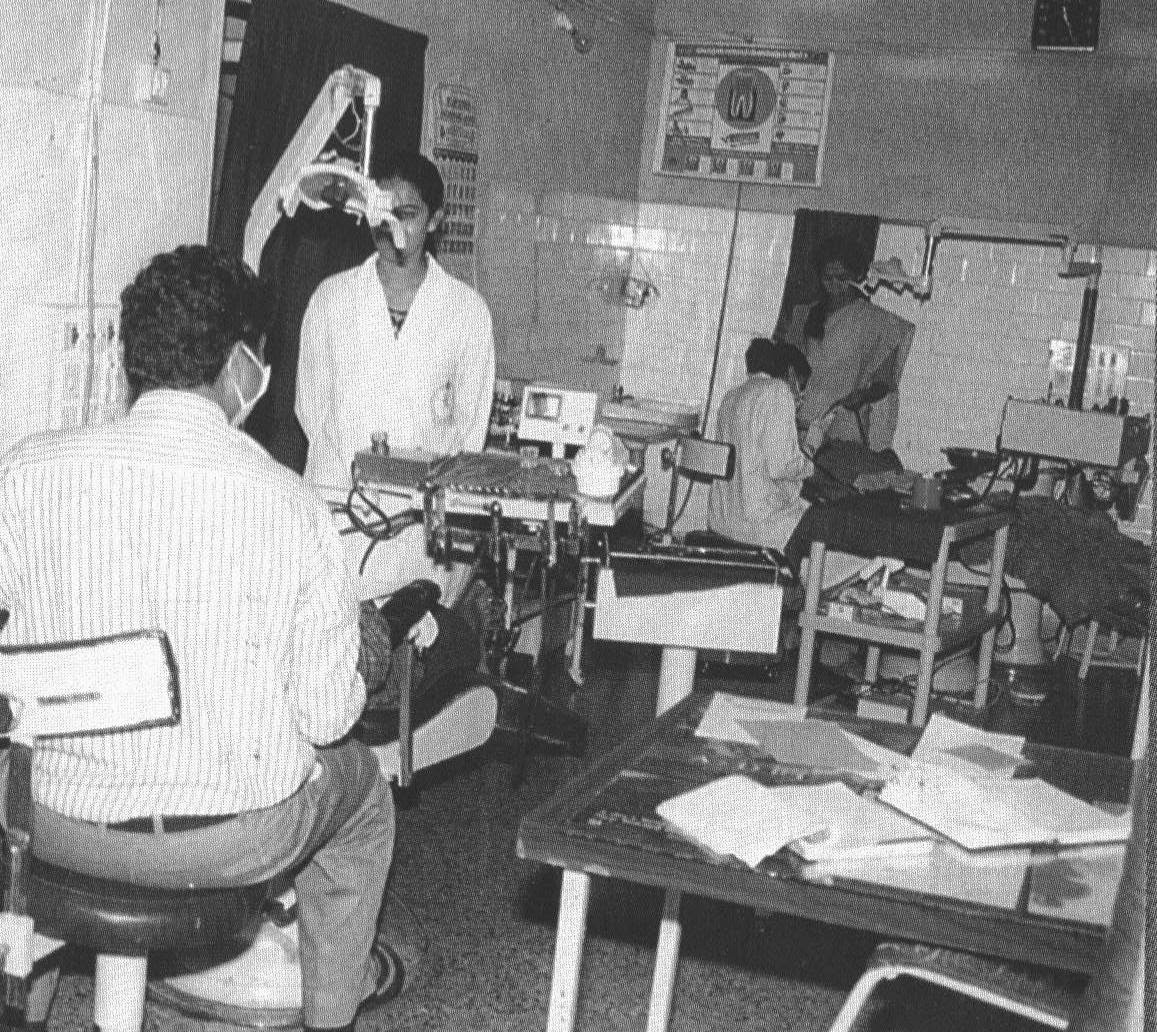
The trust is conducting health camps mainly for Vanavasi Bandhus and these are the photographs of heath camps conducted on 25.05.2014, where specialist doctors from Surat did honorary Service.


Chethana Special School, Karkala, Karnataka

Chethana Special School, Karkala, Karnataka

Started by some enthusiastic youths of this Jain Pilgrimage centre where a 42 ft statue of Lord Bahubali was consecrated in the year 1432.


At present with student strength of 50, it is having all facilities like, speech therapy, physiotherapy, yoga, vocational training, etc. These students participated in state level Olympics for special children, Rotary club competitions etc and won gold medal at dist, state & national level championships also. Midday meal & other needed help are offered by Sri Venkataramana Temple which is pioneer in philanthropical activities. Government of Karnataka honored this with cash award of Rs.25, 000/- for the devotion, dedication & commitment of the social workers of this temple of physically challenged.


Contact Address:
Chethana Special School, Karkala Regd.No.4/2004-05 dt 31-03-2005.
S.V.T. School Road, Karkala-574104, Karnataka
08258-233166, 09964907492, 230932

Email: chethanaspecialschool@yahoo.in, Website: www.chethanaspecialschool.org

Ashwini Hospital, Madakeri, Karnataka

Ashwini Hospital, Madakeri, Karnataka

Poor, downtrodden and under privileged patients turned away from other hospitals are welcomed in this hospital. Founded in 1977, this hospital is situated in the dist centre of Kodagu, a district famous for its valour, and which produced eminent personalities like Gen Kariappa, Gen Thimmaiah and thousands of coorgies who have served/ serving armed forces of our great nation.


The hospital is having all the specialty services and also an artificial limb & rehabilitation centre. Free eye, dental, urological, gynecological, cancer detection and diabetes camps are conducted in remote villages of the district benefitting thousands of labourers working in Coffee estates and remote villages. It also runs Matruchaya & adoption Centre and Centre for physically challenged.
Contact Address:
Sri Kaveri Kripa Vishwa Kalyana Seva Samithi
Ashwini Hospital, Ashwini Road,
Modikeri-571201, Kodagu- Karnataka

PH: 08272-225611, Email: ashwinihospital77@gmail.com

Grama Bharathi, Barkatpura, Hyderabad

Grama Bharathi, Barkatpura, Hyderabad

This voluntary organization is working for people’s movement for village reconstruction, integrated approach for rural development to achieve a network of model villages in Telangana and Rayalseema districts of Andhra Pradesh, some of which are extremists affected also. Some of the projects are,

1.      Kalpaguru Village in Medak Dist: Clean & green village drive was taken up by villagers themselves, renovated 1000 year old temple, built community centre, free study centre, medical aid, income generation programmes were started. Thus, the village has become self sufficient, and exodus to cities has stopped.

2.   Kollampalli,  Mehboob Nagar Dist:
                      i.        Four Single teacher school takes care of tribal areas nearby
                    ii.        Primary school was started by the villagers and the health care , thrift, farming activities, awareness in women is taken care of from the school itself
                   iii.        Adult literacy programme, study centre has been started
                   iv.        Community Centre is constructed

3.    Chityal:  The community Centre constructed serves as a Centre where free medical camps are held, tailoring centre, free coaching classes, interactive sessions of villagers with Govt departmental heads are held.

4.    Gurrevula, Warangal Dist: The villagers of this village surrounded by thick forests have floated self help groups with a revolving fund of Rs.10 Lakhs. Through Shramadan they have constructed temple & school building. Adult literacy and non formal centres of education have been started. Deaddiction movement is successfully launched by which people are happy.


5.    Marrigudem, Nalgonda Dist: “Krishi Vanam” which is model for water management & environmental protection was started successfully in this most backward area with a scanty rainfall and which is drought prone area. Rain water harvesting is done through farm ponds and contour bunds. Free plantation, experiments in vermiculture, horticulture and dry land farming are the other activities. A diary project has been started benefiting 40 formers. Study Centre, Tailoring coaching centre, medical aid, non formal education centre are the other activities.

In toto Grama Bharati is training villages and so far
trained 500 villagers from 50 villages and they conduct
study tours “Adarsh Gram Darshan” to
Ralegaonsiddhi, Chitrakoot, Alwar etc so as
to enable them to emulate these model villages.

Contact Address:

Grama Bharathi, Barkatpura(1996) Regd.No.3397/1996.
3-4-852, Keshava Nilayam, Barkatpura, Hyderabad, A.P.-500027 
Ph.040-27565514, 27562363 M.Ravinder Reddy Secy. 040-65134316,
Dr.B. Surender Reddy,Pres. 27565447 Fax: 27566029     
Email: sevabharati@yahoo.com , Website:   www.sevabharathi.org                                                                                               

Apang Kalyankari Shikshan Sanstha & Samshodhan Kendra, Wanawadi, Pune

Apang Kalyankari Shikshan Sanstha & Samshodhan Kendra, Wanawadi, Pune

 
This famous organization founded in 1956 undertakes medical rehabilitation of physically challenged children, their schooling, prevocational training etc with hostel facility.

At present there are 250 inmates (boys & girls) from Maharashtra, Bihar, UP and Karnataka. Apart from primary School the children are given vocational training in tailoring, computer, artificial limbs & caliper workshop, carpentry, electrician course etc.

 The orthopaedic operations are also being conducted here free of charge. Dr APJ Abdul Kalam, Sri LK Advani, Chief Ministers, Governors, Union Ministers have visited this prestigious institute. Recently this has been awarded National Award for Empowerment of Persons with Disabilities 2012 by The Hon. President of India at Vigyan Bhawan, New Delhi.
Contact Address:
Apang Kalyankari Shikshan Sanstha va Sanshodhan Kendra (Regd.No.E-209 dt.06-11-1956)
The Society For The Welfare Of The Differently Abled Persons (Physically Handicapped) Education & Research Centre, Wanwadi, Pune-411040
Adv.M.N.Kchre-9823182824, HM Sh Pradeep Waje -9823382434 
Secy. B.S.Jagdale-02026820987   


Email & Website:  apkalyan_sanstha@rediffmail.com, www.swph.org

Seva Sahyog Foundation,Pune – Gift a School Kit

Seva Sahyog Foundation,Pune – Gift a School Kit


Every year at the time of school reopening, after vacation, the foundation takes drive of distributing school - kits to thousands of students in and across Pune, Maharashtra, and gives a call to donor “Gift a School Kit”. While the project is becoming popular day by day, it has spread its wings to other parts of our country.


Contact Address:

Mumbai Office :-
Seva Sahayog Foundation,
1st floor, Pitruchaya,
Paralkar Marg,
Shivaji Park, Dadar (W),
Mumbai-400028,
Office No. :022 24446094
Email: mumbai@sevasahayog.com
 

Pune Office: 
Flat No. 7, 1015/4 Shreya Apartment,
Near Swanand Hospital,
Deep Bunglow Chowk,
Shivajinagar,
Pune -411016,
Maharashtra, India.
Email: pune@sevasahayog.com
Tel: 020 25657657.

Saturday, 24 May 2014

Making body donation a movement

Making body donation a movement
Delhi advocate Alok Kumar pledges to wipeout waiting list for cornea transplantation in Delhi within three years

At the time when lakhs of people die every year in the country in want of organ transplant, one million wait for cornea transplantation and about 30 to 35 young medical professionals are forced to study on one cadaver only, senior advocate of Delhi Shri Alok Kumar has taken a step to change this scenario. Through Dadhichi Deh Dan Samiti, he has so far provided 83 human bodies and 365 pair eyes to different Government Medical Colleges of Delhi. With the help of like-minded people and organisations he has now pledged to wipeout the entire waiting list for cornea transplantation in Delhi within 3 years.


DO you know around five lakh people die in our country every year because of non-availability of organs and two lakh of them die of liver disease only? Equally, about 50,000 die from heart disease and out of 1.5 lakh people waiting for kidney transplantation hardly 5,000 get one. Not only this about one million people suffer from corneal blindness and await transplantation. The reality is that just 0.08 persons Per Million Population (PMP) donate organs in our country. This is an incredibly insignificant number as compared to the organ donation statistics around the world. There is one more fact. Four medical students need a cadaver to complete their studies, but today 30 to 35 students have to study on one cadaver only.

On the other hand the countries like USA, UK, Germany, Netherlands, etc have seen the organ donations double per million population averaging between 10-30 PMP. Other countries like Singapore, Belgium and Spain have seen the rate of donations double averaging between 20-40 PMP. This all indicate to the speed that we have to move for body or organ donation. In such a situation the efforts of Shri Alok Kumar seem to be making a big impact in the lives of both, those who are waiting for organ transplantation and the young medicos who need cadavers for understanding the human body for advancing science.

“The seed of this initiative basically germinated during 1974-75 when I was a Sangh Pracharak in Amritsar. I frequently visited the Medical College there. The very first exhibit in the anatomy museum there was of a retired Head of the Department, who had written in his ‘will’ that ‘all my life I have been teaching my students on other persons’ bodies. Now, I wish that after my death my body is donated to this place’. I wrote to Dr Harsh Vardhan, who was then in Kanpur Medical College, about the wonderful idea of body donation. He wrote me back enthusiastically endorsing the idea. Later, the Emergency was imposed and we both were engaged in other things,” recalls Alokji while sharing his experience on February 10, 2014 in Delhi.


In 1994, when the Transplantation of the Human Organs Act was passed, Alokji and some of his friends decided to donate their bodies. They did it by registering their wills with the Sub Registrar. “My wife was in the court as a witness. On that day I had a wonderful experience. Sub Registrar was sitting on his seat. He called my name and I walked five-six steps towards him. In those steps I, in my mind, visualised as if I am dead. I saw my dead body and the friends, family members assembled there. Some of them were weeping, sobbing and some were satisfied that now they could work in politics free of me. And then I visualised a medical college van coming and taking my body away. The will was registered. Next morning as I just sat out, the meaning of it unfolded before me. I saw my dead body being taken away. But I am not the body. I am different form. Who am I? And then the answer came to me Main shuddha, buddha mukta atma hoon. I am not the body I am spirit and soul,” Alokji added.

Alokji believes that body donation is a spiritual work. He shared one more interesting experience: “When Yamuna inundated, I was assigned for the relief work that year. Naturally, it kept everybody busy 24 hours. I caught some infection in my eyes and they swelled. Everyday my father would ask me to go to a doctor and every day I would tell him that I have no time. One day he said, Alok! ‘you have donated your eyes’? I said, ‘off course’. ‘They have to be given for transplantation’? I said, ‘Yes’. Is it not that you are a mere trustee of your eyes now? ‘Yes’. ‘Is it not your duty to keep them good and usable’? That was the second idea that I got. In fact, we are just trustees of our bodies.”

Around 1997, when Nanaji Deshmukh expressed the wish to register him for body donation that the Dadhichi Dehdan Samiti came into existence. Alokji recalls: “When I was doing the documentation for Nanaji’s will, he said he is a Pracharak and remains on tours, what if death came outside Delhi. I said that will be the God’s will, as we cannot operate outside Delhi. Nanaji was very anxious on my answer. He thought for sometime and called for cheque book. He made a cheque of Rs 11,000 in our favour and said ‘I am paying you the expenses. Now wherever I die, you have to arrange for bringing my body to Delhi and give to the AIIMS. This is how Nanaji became the Samiti’s first body donor. Later, when Nanaji left his body at Chitrakoot, it was brought to Delhi and donated to the AIIMS.” Other prominent body donors include two former MLAs, Bodhraji and DK Jain, and former BMS national president Rajkrishna Bhakt.

The Samiti accepts the pledge for body or organ donation only in a prescribed form having signatures either of a close family member or the person of the donor’s choice. It also asks the donor to donate at least a sum of Rs 150. “Like 16 samskars in our culture, we have made body donation also a samskar. Every year we hold a festival of body donors, in which the donors come with their witnesses. We executive their will and give them identity card and certificate. The event prominently has four presentations—one by a person who has donated the body in his family that year, second the person who pledges for body donation, third a top person from spiritual field, and four a top person from medical field. The whole exercise firms up an understanding in the donor and his family that this donation is a pious obligation,” Alokji adds.

So far, 83 whole bodies have been donated to Maulana Azad Medical College, AIIMS, Nehru Homeopathy College, University College of Medical Sciences, Hamdard Medical College, etc. The eyes were prominently donated to Gurunanak Eye Centre. “We have resolved that within three years we would wipeout the waiting list for eye transplantation in Delhi. The RSS Delhi Prant has also decided to take it as a common endeavour with us,” he points out.

The initiative has received the blessings of many big personalities like RSS Sanghachalak Shri Mohan Bhagwat who attended a function in Patna. Didi Maa Sadhvi Ritambhara, on 80 birth anniversary of her guru, decided to gift 80 pledge forms for body donation. But the number of forms that were actually given was 126. Around 3,500 people including VHP patron Ashok Singhal, senior leader Acharya Giriraj Kishor, former Dy CM of Bihar Sushil Modi are now registered with the Samiti for body donation.

When asked how the bodies are collected after death, Alokji says: “When the death takes place all that the family members have to do is to call our helpline number. The entire subsequent arrangements are made by us, which include coordinating with the family, arranging a vehicle to collect the eyes or body ensuring that the body is delivered to a medical college in time.”

Changing the mindset is the biggest challenge in such cases. Replying the queries of some mediapersons, who asked how one would get salvation if the body is not cremated, Didi Maa said Shastras prescribe methods for it. One can do his pindadaan in his lifetime. If somebody does it and his body is not cremated then non-cremation is not an abstraction to body donation. “Former RSS chief Rajju Bhaiya once pointed out that the Ayurveda has proper methods of studying the human body. It even provides for the instruments by which it is cut and the way it is to be studied. It shows body the donation has been a long practice in our country,” points out Alokji.

The Samiti works in the National Capital Region only. Some people in Patna, Pune and Mumbai have formed separate units. “It is the work which needs timely action. If the eyes are not taken within four hours they become useless. Equally, if the other organs are not taken in time they cannot be transplanted. That is why we cannot operate outside Delhi,” concluded Alokji. When we see the human organ rackets flourishing in different parts of the country, this initiative shows the way.


Veteran Sangh Pracharak Shri Sitaram Kedilaya on 15000 km walk to wake up villages

Veteran Sangh Pracharak Shri Sitaram Kedilaya on 15000 km walk to wake up villages
Mapping rural Bharat by foot
The mindset of depending upon government for everything is believed to be the biggest barrier in rural development today. Contrary to it, the villages, which abridged dependence on government agencies, have registered notable growth in different spheres. In order to awaken the villagers for self-development, 67-year old RSS Pracharak Shri Sitaram Kedilaya is on a 15,000 km long Bharat Parikarma Yatra since August 9, 2012. On March 9 he traversing around 6000 km distance was at Domet village of Dehradun in Uttarakhand. During this walkathon he mainly focuses on six points—love your village, love the mankind, conserve the water, help elders, promote village artisans and join hands for uplift of your respective village. Know Bharat, Be Bharat and make Bharat Vishwaguru is the tag line of this unique walkathon.

He is short in size but thinks high—normally beyond the box. He looks weak but has amazing vitality to face any challenge—more than any modern youth. At the age of 67, he walks to invigorate the villages. Everyday he walks 10 to 15 km from one village to other, educating villagers to join hands for development of their respective villages and dump the habit of always depending upon government for everything. Till March 9, 2014 he had completed 575 days of his journey traversing around 6000 km distance. The voyage will continue for more three and half years. During the whole expedition, which he calls Bharat Parikrama Yatra, he has no personnel belongings, takes single meal in the noon through bhiksha only and stays only in a village.

The stalwart is Shri Sitaram Kedilaya, RSS Pracharak for more than four decades and former Akhil Bharatiya Sewa Pramukh. Since the day he stepped out for this walkathon, some call him Sant Sitaramji or Babaji, while some call Bapuji, Mahatmaji, Maharajji or Swamiji. Though as a Sangh Pracharak he is no less than a saint. Wherever he goes people bow before him with respect and salute his conviction of mapping rural Bharat for a great mission. “I am still a Sangh Pracharak. It doesn’t matter if somebody calls me a Sant or Maharaj,” he says. His discourse on village development impressed the people so much that in many states where he visited the people have formed permanent committees to continue the tasks he assigns. One should not wonder if this follow-up action in Kerala, Karnataka, Gujarat and Punjab brings about a big change in the days to come.

Beginning on the anniversary of Quit India Movement (on August 9, 2012) from Kanyakumari, the Yatra daily begins with thegoupooja unfailingly in the village Sitaramji happens to be in. At 6.30 am the Yatra begins with a walk for the next village. Visiting the nearest temple and offering prayers is always part of the Yatra. After entering a village, he takes rest for a few minutes, following which he plants a tree in the temple premises or in its proximity. Lunch is a moderate affair, which is always at a villager’s home, irrespective of caste, creed, language, colour or way of worship.

Then he goes for ‘Gram Sampark’, where he interacts with select individuals, mostly the school teachers, Gram Vaidyas, village heads, traditional artisans, differently abled, etc. This is followed by a mass gathering known as Gram Sankeertan, where he addresses the villagers on development issues—protection of land, cows, individuals, families, conservation of trees, biodiversity, water, preservation of native village culture, rural employment and rural medicines available in kitchen or the vicinity.

“All these help create a bond of great depth with the people, which ultimately help the villagers realise that the villages are a single encompassing family. However, this feeling has taken a back seat now, which has led to emergence of a whole lot of problems everywhere. This has now escalated to national and international levels. The feeling of unity, along with creation of family bonds, if brought back to villages ensures restoration of harmony to a great extent. This can be instrumental in rekindling the concept of Vasudhaiva-kutumbakam,” explains Shri Kedilaya during a discussion at Sadhna Ashram of Dehradun on March 9, 2014, the 576th day of his Yatra.

When asked why he started the Yatra ‘alone’ at this ripe age, he replies, “What makes you feel that I am alone? I have the thoughts and ideas of as many as 121 crore people with me.” But he makes it clear the endavour is a follow-up action of the Vishwa Mangal Gou Gram Yatra conducted in 2009, which exhorted the nation for protection of villages, cow and the nature. Prominently the people and the organisations which joined hands with the Gou Gram Yatra are now managing the whole affairs in this Yatra.

Sharing the experience and the response he received in 576 days, he says: “Not a single incident of opposition was reported anywhere and people from all sections, communities willingly listened to us. It is the experience of pure love (shuddha satvik prem), which is still alive in our villages.”

When asked in which state the response has been as per his expectations he said: “Comparison is not good. Every state worked as per its capacity. If you want to know which states drew maximum benefit of this endvour I name Kerala, Karnataka, Gujarat and Punjab, as they formed receptions committees in advance and after the Yatra they converted those committees into the teams to start follow up activities.”

To apprise the policymakers and political leaders of his experience Sitaramji writes a comprehensive letter to Chief Minister and Governor of the respect state after completing the Yatra explaining what he saw and what needs to be done. When asked how many Chief Ministers replied his letters he names only one —Maharashtra. He is very clear on certain aspects of village development. He wants to restore the ancient values of life in villages but he is certainly not opposed to any modern facility. He focuses on a blending of ancient and modernity.

During my decade long association with Sitaramji I have seen whatever task he takes up, he does not leave it without completion. He was mastermind of the Vishwa Mangal Gou Gram Yatra, which initiated a solid beginning of cow protection activities all over the country. Needless to say that this walkathon too will prove to be equally fruitful, generating a sense of self-development and change in mindset.

Box
The walkathon began on August 9, 2012 from Kanyakumari with the slogan ‘Know Bharat, Be Bharat and Make Bharat Vishwaguru
10 to 15 km walking every day, target to walk more than 15000 km in five years
States covered so far are Tamil Nadu, Kerala, Karnataka, Goa, Maharashtra, Dadra & Nagar Haveli, Gujarat, Rajasthan, Haryana, Punjab, Jammu & Kashmir and Himachal Pradesh. Now taking rest at Sadhna Ashram, Dehradun, Uttarakhand since February 28
Takes only single meal a day and that too through bhiksha only
No possessions or belongings during the whole journey
Single point agenda to rejuvenate the villages strengthen the feeling of unity and family bonds among villagers


Ahilya Mahila Mandal transforms the lives of over 1,500 Vanvasi and rural women in Pen near Mumbai

Housewives turn social reformers
Ahilya Mahila Mandal transforms the lives of over 1,500 Vanvasi and rural women in Pen near Mumbai

Housewives are regarded the best managers at home, but their potential and skills are hardly used for social cause. A group of housewives in Pen, a small town in Raigad district of Maharashtra, broke this tradition and set a precedent by transforming the lives of over 1,500 Vanvasi women. After finishing their family responsibilities they run girls hostel, old age home, blood storage centre, garment manufacturing centre, spice based products and papad making, Tiffin service, primary school, pathological lab, medical centre, providing nutritious meal to over 2,000 children, micro finance, train purohits and even prepare dancers. All these activities are conducted under the banner of Ahilya Mahila Mandal. The interesting fact about these activities is that they are all managed only by the housewives.


The management skills of housewives have wondered even the top management gurus. But their expertise is hardly used for social cause. Breaking this tradition, a group of housewives in Pen town, about 100 km from Mumbai in the heart of Sahyadri ranges has set an inspiring precedent by extending a helping hand to the local needy people through multifarious sewaactivities. They conduct 15 major activities including an old age home, blood storage centre, a garment manufacturing centre, a spice based products and papad manufacturing unit, a Vanvasi girls hostel, a primary school, a catering service centre, a Sanskrit school, a pathological laboratory, free treatment and awareness to Vanvasi women and children, nutritious meal to 2,000 children every day. The number of beneficiaries of all these activities is more than 70,000.

“The housewives associated with us contribute in these activities as per their convenience, skills, interest and talent. We have work for everyone whether highly educated or illiterate. After finishing their household works they join us and devote their free time for the welfare of the needy people. Beginning in 1996, the initiative has so far involved thousands of women,” says Smt Vasanti Dev, the torch-bearer of the initiative.

When asked how the idea of starting the initiative clicked, Smt Shulbha Joshi, former president of the Mandal says, “While attending an awareness programme organised for women in 1996, the fourth centenary year of Ahilyabai Holker, we thought of starting this initiative focusing on improving the socio-economic conditions of rural and Vanvasi women in Pen Taluka.”


Since Pen is fast emerging as a higher education centre, these women started supplying  home-made nutritious tiffin to the engineering students. The initiative later was named as Swad Bharati. Then many new avenues continued to be added as the need was realised. “Change is inevitable in the society. However being proactive in managing change is the most difficult part. The Mandal was started in 1996 with just 12 members and small projects like family counselling, medical camps and training to women. However, I always believed that we could do things on a larger scale. Today, we have 15 on-going projects including landmark projects,” adds Smt Vasanti Dev.

The women associated with the Mandal have tried to touch every problem of the society. The family counselling centre has saved many families from breakage. The counselling centre also provides valuable inputs to the Vanvasis by addressing their issues like migration and its effects. They also organise health camps in Vanvasi hamlets and readmit the school drop-outs in schools. “This enables us to identify patients afflicted by the kind of diseases they suffer from and act as a referral point for advanced treatment. The major afflictions identified are anemia, malnutrition, ENT, ophthalmic and till date 2,100 patients out of which 1,840 have been referred for advanced treatment,” says Smt Ashwini Gadgil, president of the Mandal.

For social cause, these women do not hesitate to fight against the administration. They started a primary school at Hetawane for the children of Hetawane Dam displaced people. The school was started in the premises provided by the Irrigation Department. But after about five years the authorities asked to close the school. But the firm commitment of these women forced the authorities to continue the school at the same location.

There are about 200 Vanvasi hamlets around Pen. One of the Vanvasi communities there is “Katkaris”. The women of the Mahila Mandal noticed that the level of education among the girls of this community there was close to zero. They analysed the causes of illiteracy and decided to starte a girls’ hostel in Pen. Thus came into being the Anandi Chhatrawas. The girls here are studying from 3rd to 12th standard. Similarly, started in 2003, the Indira Sanskrit Pathshala has trained over 300 purohits, who now practice and conduct various rituals. Some of thesepurohits are women, who perform traditional rituals on various occasions. Nearly, 40,000 students have been taught Ganpati Atharvashirsh Shloka.

The self-reliance activities by these women have impressed one and all. Through Swad Bharati they have set-up a common kitchen to provide midday meal to school children, old age home and also to others on social or religious functions.  Under Swayamsiddha project, they collected sewing machines, tables and other required materials from various resources, and started stitching clothes. The women employed under this unit are from underprivileged class. In last 14 years, nearly 500 women have been trained under this initiative, out of which 60 women have started their own business.

The initiative by Ahilya Mahila Mandal, if imbibed by the housewives across the country, can change the picture of the entire nation. They have potential, skills and expertise. What is needed is just the determination to bring a change. Ahilya Mahila Mandal has shown the path.


Excuse

Note: Dear Friends….Excuse any mistake in my writing